
Last updated November 21, 2026
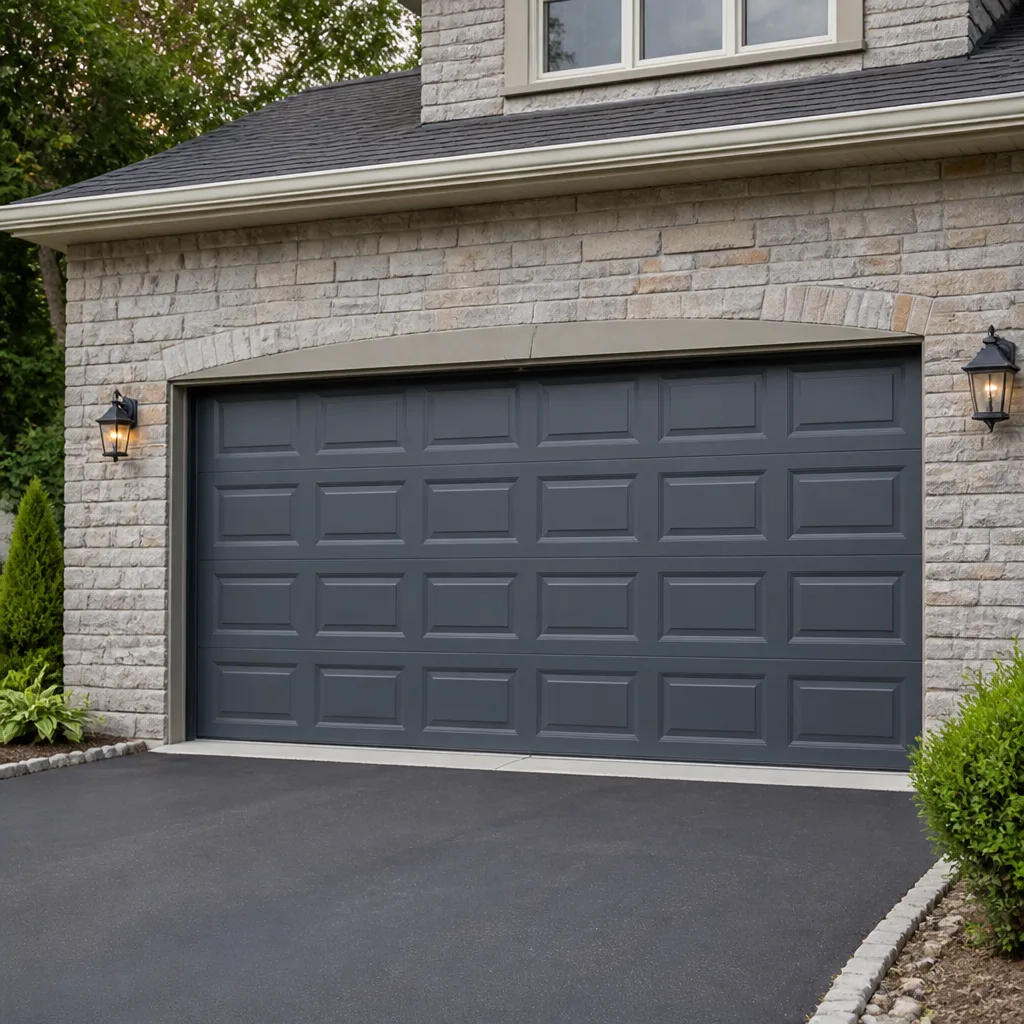 Raised-panel steel
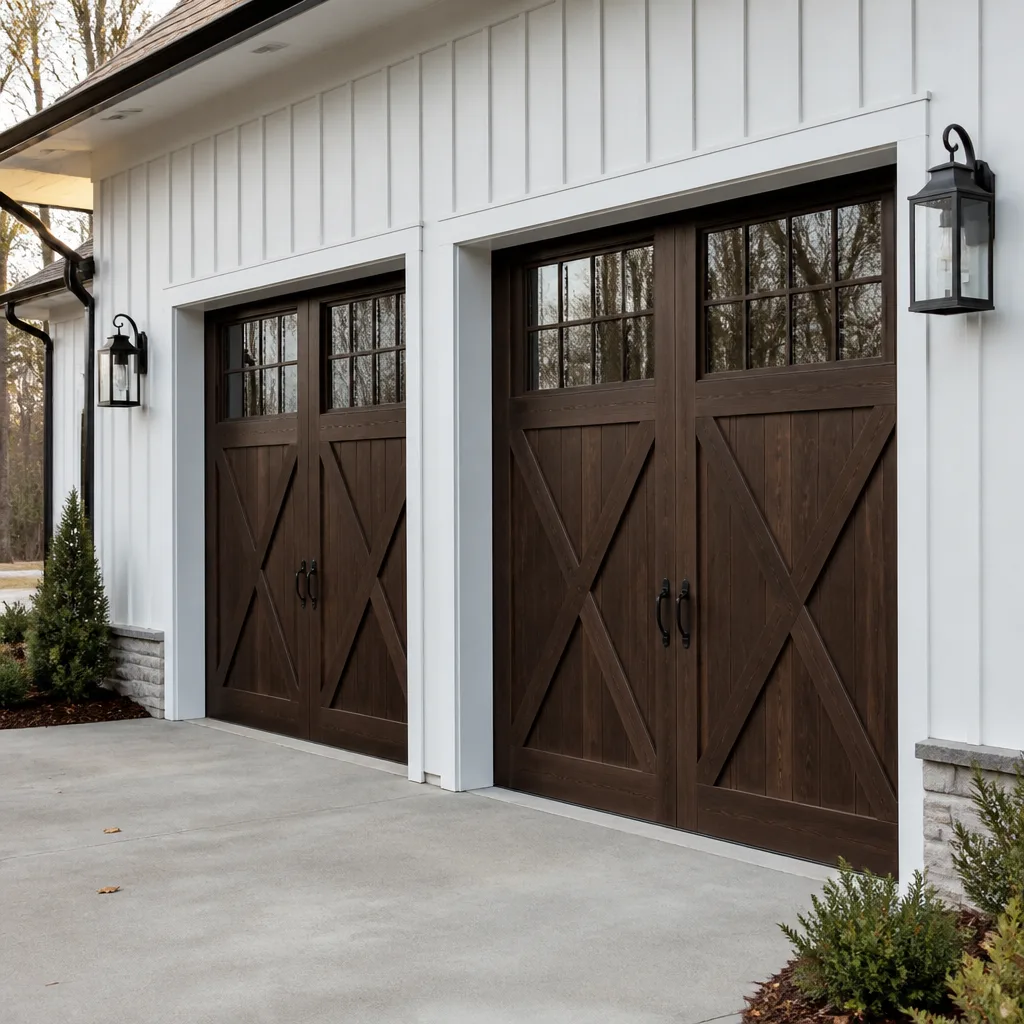 Carriage house
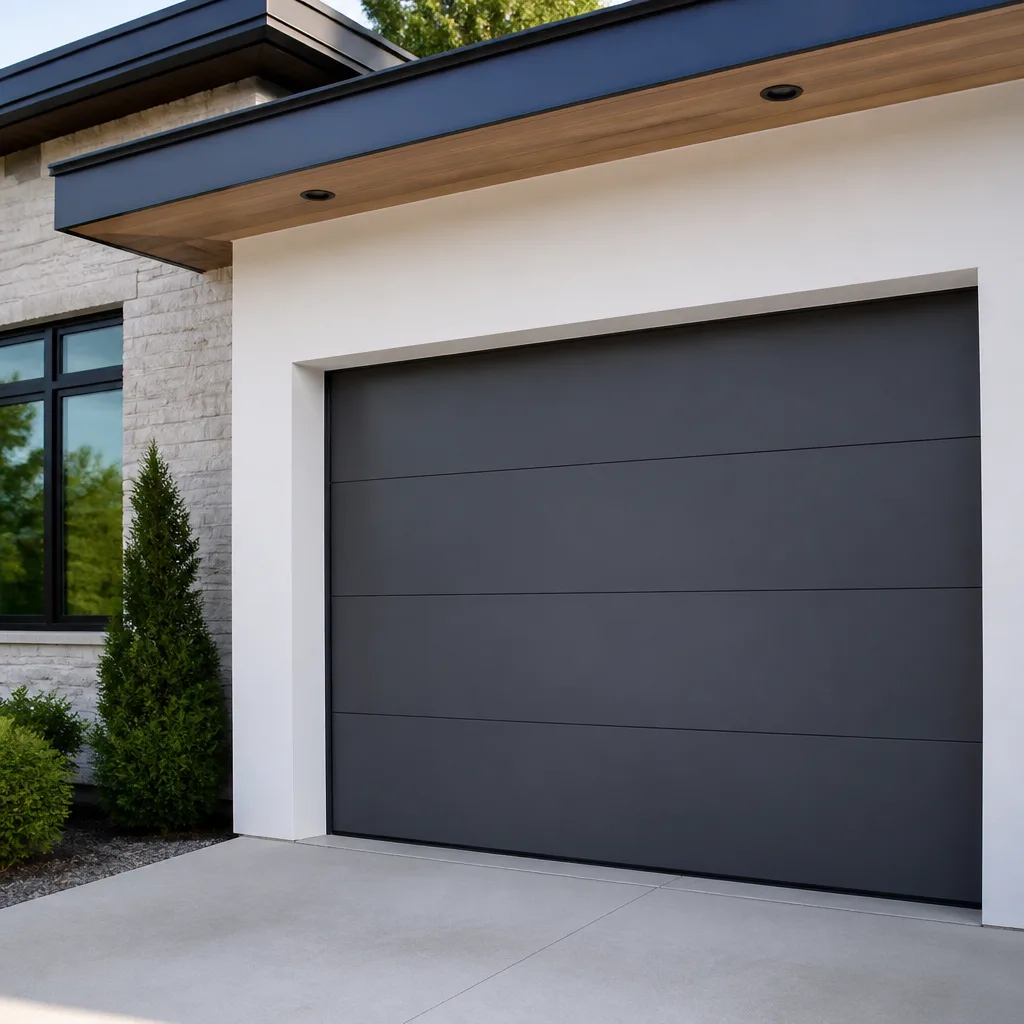 Modern flush
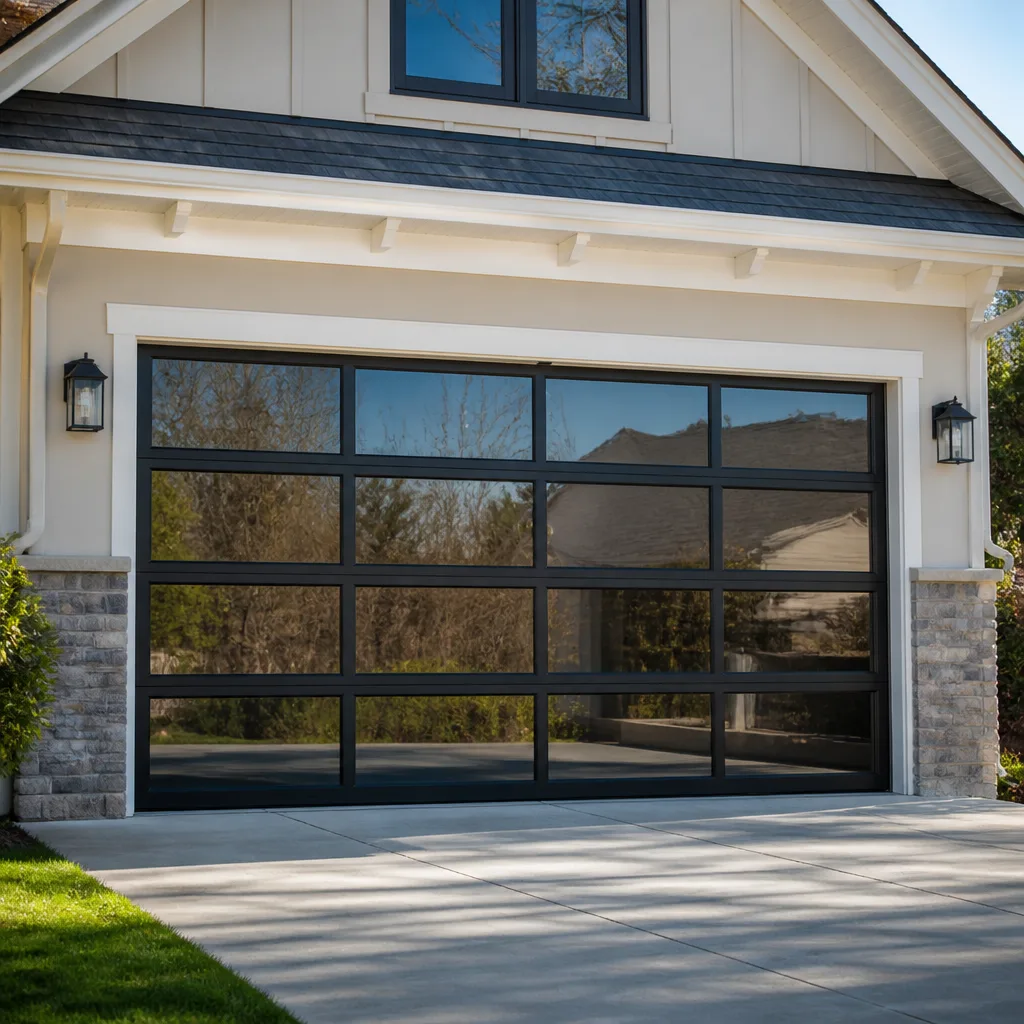 Full-view glass
 LiftMaster openers
 Chamberlain openers
Full 25-point door and opener safety check with every visit - springs, cables, rollers, tracks, and your LiftMaster or Chamberlain opener included
You get a price before we start. It does not change when the pro arrives.
Get your free estimateDIY vs Professional Garage Door: The East New York Homeowner’s Decision Guide
Springs are the reason this question has a real answer. The springs above your garage door hold hundreds of pounds of stored tension every hour of every day, and when one lets go the energy releases all at once. That’s not a scare tactic – it’s the reason the DIY-versus-professional call splits cleanly down the middle instead of landing on “it depends.” Some garage door tasks genuinely belong in a homeowner’s hands. A few should never be. This guide walks through both sides task by task, explains the mechanical reason behind each line, and gives you a realistic way to weigh the savings against the risk for your own door in East New York.
Quick Answer
Safe DIY garage door tasks in East New York are limited to lubrication, visual inspections, tightening exposed bolts, replacing batteries and remotes, and clearing the safety sensor path. Anything involving torsion or extension springs, cables, bottom brackets, or the door’s counterbalance system should go to a trained technician – the stored energy in those parts is high enough that a mistake can cause serious injury. Panel replacement, opener repair and full installation are jobs where the tools, diagnostic skill and warranty backstop favor a professional.
Styles & brands we work with
- Raised-panel steel
- Carriage house
- Modern flush
- Full-view glass
- LiftMaster openers
- Chamberlain openers
Table of Contents
- Why the Risk Math Beats the Skill Question
- What’s Genuinely Safe to DIY (and Why)
- The Tasks That Should Never Be Homeowner Jobs
- The Real Cost of DIY: Tools, Parts, and Callbacks
- East New York Constraints That Change the Calculus
- Partial DIY: Where Homeowners Still Add Value
- How to Read a Repair Video Before You Trust It
- Common Mistakes to Avoid
- When to Call a Professional
- Frequently Asked Questions
- The Bottom Line
Why the Risk Math Beats the Skill Question
Most homeowners frame this as a confidence problem. “Am I handy enough to fix this?” That’s the wrong question, and it leads to expensive conclusions. The right question is narrower: does the cost of doing this myself – in tools, in parts, in the chance of a callback – beat the cost of having a trained technician handle it? For some tasks, yes. For others, the spread is so thin that the risk swallows the savings entirely.
Garage door work sits at a strange intersection: it looks mechanical and approachable from the outside, but the core of the system is a counterbalance made of springs and cables holding four or five hundred pounds of live tension. That’s the part that gets people hurt. The rest of the door – the panels, the track, the opener, the sensors – is far friendlier and gives homeowners real room to work.
So the way we think about it is task by task, not door by door. Here’s the split:
- Low risk: lubrication, visual inspection, sensor cleaning, remote and battery work, tightening visible bolts, replacing a weather seal.
- Medium risk: track adjustment, roller replacement when the door is fully closed and the springs are in a neutral state, opener programming and diagnostic resets.
- High risk: torsion springs, extension springs, lift cables, bottom brackets, the center bearing plate, and any work that requires the door to be held open while you’re under it.
The medium band is where experience matters. The high band is where it’s non-negotiable. In East New York, homeowners live with all three bands on the same door, and knowing which task lives where is what this guide is for. If you want the full service picture for the trade – not just the DIY split – start with garage door repair as the baseline, then branch into the specific tasks below.
What’s Genuinely Safe to DIY (and Why)
Here’s the good news: several garage door jobs are legitimately homeowner work, and the mechanical reasons for that are clear. When a task involves no stored energy, no overhead load, and no special tools, the professional carries the same risk you do – so doing it yourself is honest savings.
The DIY tasks that make sense:
- Monthly lubrication. A few drops of lithium grease or a light silicone spray on the hinges, rollers, tracks and springs reduces wear and quiets the door. It takes ten minutes and adds real life to the parts. This is the single highest-value thing a homeowner can do for a garage door in any neighborhood.
- Visual inspection. Once a month, look at the springs for gaps or gaps in the coils, check the cables for fraying at the drums, look for loose hinge bolts, and watch the door cycle for wobble or imbalance. You’re not fixing anything – you’re spotting problems early, which is exactly how small repairs stay small.
- Sensor cleaning and alignment. If the door reverses on its own or won’t close, the safety sensors at the bottom of the tracks are the first place to look. Wipe the lenses, check that the indicator lights are solid, and clear debris from the path. This solves a large share of “my door won’t close” calls without a technician visit.
- Remote and keypad work. Replacing batteries, re-pairing remotes, programming a new keypad code on a LiftMaster or Chamberlain opener – all safe, all doable, and the manufacturer instructions are reliable for these openers.
- Weather seal replacement. A worn bottom seal lets in drafts, water and pests. It’s a homeowner-level job: the door stays closed, the springs stay untouched, and a new seal pushes into the retainer with relative ease.
Notice the common thread. None of these jobs require you to disable the spring system, work under an open door, or trust a tensioned cable. That’s the line. The tasks above keep the counterbalance intact and untouched, which means the door’s stored energy is never your problem.
A Craftsman or Genie opener can often be nursed through minor issues with the manual in hand – force limits, travel limits, remote pairing – but if you’re chasing a problem that doesn’t live in the manual, that’s when the diagnostic skill of a technician earns its keep. More on that in garage door opener repair.
The Tasks That Should Never Be Homeowner Jobs
A torsion spring failure can drive a steel rod through drywall. This is not a figure of speech or a rare scenario – it’s a mechanical certainty of what happens when a spring releases energy while a winding bar is in the wrong position. That single fact is why the entire high-risk band belongs to trained technicians, and we mean all of it.
The tasks that should never be DIY:
- Torsion spring replacement. The spring above your door is wound to a specific number of turns to counterbalance the weight of the panels. Winding it requires two steel winding bars, an understanding of the door’s weight-to-spring ratio, and a controlled hold on the energy the whole time. There is no safe shortcut for a homeowner, and the tools alone cost more than the job typically does.
- Extension spring replacement. Extension springs stretch along the sides of the door and store the same kind of energy. If one breaks during replacement or adjustment, the energy releases toward the opener or the operator. This is a technician job for the same reason as torsion.
- Lift cable replacement. The cables run from the bottom corners up to the drums at the top of the tracks. They’re under tension any time the door isn’t fully open, and a cable that slips can snap a drum or whip across the garage. Not a homeowner task.
- Bottom bracket removal. The bracket at the bottom corner of the door is where the cable attaches. It’s under load, and the entire door’s lift depends on it. Remove it without releasing the spring properly and the door can drop.
- Center bearing plate work. This is the bracket the torsion shaft passes through at the top of the door. If it’s worn, the door binds; adjusting it while the springs are live is dangerous without the right technique.
- Panel replacement that changes the door’s balance. A new panel weighs something different from the old one. Adding or swapping panels can throw a perfectly tuned spring system out of balance, which stresses the opener and shortens spring life. If you’re replacing panels, plan to have the balance checked.
Wayne Dalton and Raynor doors often use specific spring configurations per model. Guessing at the right spring on those doors isn’t just risky – it’s likely to leave the door badly balanced and the opener working harder than it should. If you’re pricing spring work, our Garage Door Repair East New York team handles this task directly, and it’s the kind of repair we’d rather do right the first time than see repeated.
The Real Cost of DIY: Tools, Parts, and Callbacks
Most homeowners compare the price of a repair to the price of the part and call it savings. That’s not the real math. The honest comparison has to include tools, retail parts pricing, and the callback rate when something gets installed slightly off.
Here’s how the numbers usually shake out:
- Tools. For spring and cable work, you’d need two winding bars, a proper set of vise grips, and often a clamp to hold the door. That’s a real outlay, and it’s one-time equipment you’ll use rarely if ever again. For lubrication and sensor work, you probably already own everything you need – which is another reason those tasks belong in the DIY column.
- Parts at retail. A homeowner buying a single torsion spring or a set of extension springs at retail typically pays more per unit than a technician who buys in quantity and knows the exact specification. The markup between retail and trade pricing narrows the gap between DIY and professional more than people expect.
- Callback repair. When a spring is miswound, an opener force limit is set wrong, or a bottom bracket isn’t torqued properly, the door works for a while and then stops – or worse, gets damaged. The cost of fixing an incorrect install often exceeds the original repair. That’s the line item that tips the math on the high-risk tasks.
- Time. A spring swap is a thirty-minute job for someone who does it every week. It’s an afternoon-or-longer job for someone reading instructions for the first time, and the value of an afternoon matters too.
Where DIY clearly wins on cost: lubrication, sensor work, seal replacement, and remote programming. Those tasks cost a few dollars in materials and save a service call. Where it loses: anything in the high-risk band, because the tools and the callback risk eat the savings. The written estimate you get from a professional is a fixed number – the DIY number has a way of creeping up.
East New York Constraints That Change the Calculus
The garage in East New York isn’t the garage in a new suburban build. The housing stock is older, the lots are tighter, and the garages were often built to fit a car from a different era. That shapes which DIY tasks are realistic and which ones turn into a puzzle mid-job.
The specific constraints that matter:
- Tight working space. A single-car garage in East New York frequently has less clearance beside the door than the videos assume. Winding a torsion spring or working a cable drum requires room to stand beside the door and hold the bars – and when the wall is close, the working angle gets harder and the risk goes up. This is one of the biggest reasons spring work on a tight East New York garage is a technician job even for a capable homeowner.
- Older hardware. Many East New York garages still run the hardware they were built with – sections that predate modern safety standards, tracks that have settled out of level over years, and springs that have been replaced once or twice with whatever was available. Older hardware means the adjustment values from a generic tutorial almost never match what’s actually on your door. A professional over time learns to read what’s in front of them; a tutorial doesn’t.
- Non-standard door sizes. Doors installed decades ago aren’t always the standard widths and heights you’d buy today. That matters most for panel replacement: a panel that measures right on paper can still require drilling to fit a specific door. For homeowners, this is often the moment a “quick swap” becomes a callback. For a professional who’s worked across Clopay, Amarr, Wayne Dalton and Raynor lines, it’s a matter of matching the section to the door.
- Wood-frame and brick garages. Older East New York garages are often built into brick or wood-frame structures where wall mounting and threshold detail matter more than in a modern build. Seals, tracks and weatherproofing need to match the structure.
- Weather that works the door. East New York winters include freeze-thaw cycles that expand and contract wood framing and stress metal tracks and rollers. Summer humidity swells wood panels. A door that runs fine in April can bind in January. That’s not a reason to skip DIY maintenance – it’s a reason to do it more often in this climate than the general advice suggests.
We see the same pattern repeatedly in East New York: a homeowner follows a repair video that was filmed on a wide suburban slab with a modern door, tries it on a tight brick garage with a thirty-year-old door, and hits a wall halfway. That’s not a skill failure. It’s a mismatch between the guide and the door.
Partial DIY: Where Homeowners Still Add Value
The choice isn’t really DIY or professional – it’s a spectrum, and the smartest homeowners land in the middle. There’s real value in the work around the repair, even when a technician handles the core job. This is where you save the most while keeping the risky part in trained hands.
The homeowner roles that genuinely help:
- Prep work before the technician arrives. Clear the garage floor around the door, move the car out if you can, and remove anything stored in the path of the door panels. It’s a small thing that gets a job started faster and makes the space safer for everyone working in it.
- Parts research. If your opener is a LiftMaster, Chamberlain, Genie or Craftsman, look up the model number before calling. Knowing exactly which unit you have – the model number on the back of the motor housing – lets a technician diagnose on the phone or arrive ready with what’s likely needed. That’s a home-owner task with a payback you’ll notice.
- Note the symptoms in detail. Does the door reverse halfway up, or stall at the bottom? Does the opener click without moving the door? Does it run gently at the start and slam at the close? Symptoms point a technician toward the right part of the system, and specific descriptions save time on the diagnosis.
- Post-job lubrication and adjustment checks. Once the door is repaired and balanced, keeping it lubed and watching the cycle is homeowner maintenance – it extends the life of the new parts and is the best thing you can do to prevent the next repair.
- Panel and seal ordering. When replacement panels are needed, homeowners can often confirm the door manufacturer and color match on their own, and let the professional handle the fit and balance.
Where this lands practically: you’re doing the easy work, the research and the maintenance; the technician is doing the risky work and the diagnosis. That split is where most of the savings live without the downside. If you want the full-scope option for a door that’s beyond repair, our garage door installation page covers what replacement involves.
How to Read a Repair Video Before You Trust It
Most garage door injuries from DIY happen because a homeowner followed a guide meant for a different door. The video itself was often fine – it just didn’t apply to the hardware in front of them. Learning to vet a guide before you trust it takes two minutes and spares a lot of damage.
Ask these questions of any video or step-by-step guide:
- Does it show torsion or extension springs? These are different systems with different safety rules. A guide for one is not a guide for the other. If the video says “these are the springs above your door” and yours are along the sides, stop – the guide doesn’t apply.
- Does the door in the video match the weight and size of yours? A 16-foot door and an 8-foot door need different spring specifications. If the guide is for a two-car door and you have a single-car door, the spring numbers in the video are wrong for you.
- Does the video show a drywall-and-stud wall or a brick and masonry wall? Mounting and clearance advice changes. A guide built around wood framing may not apply in a brick East New York garage.
- Does it show the exact opener brand on your motor? Programming steps for a LiftMaster or Chamberlain are specific to their logic boards. A Genie opener behaves differently. If the guide is for a different brand, the force limit and travel limit steps are likely wrong.
- Does it acknowledge the danger of the task? A guide that shows spring work without a clear warning about stored energy and the danger of the operation is a guide you should close. A real technician always names the danger; a video that doesn’t is telling you it was made by someone who isn’t one.
- Does it show the complete task or just the easy part? Many videos stop just before the trickiest step – re-engaging the door safely. A guide that skips the finish isn’t a complete guide.
The single most useful habit: match the guide to your exact door before you buy anything. If you can’t answer the first four questions with certainty, the guide isn’t for your door.
See the difference
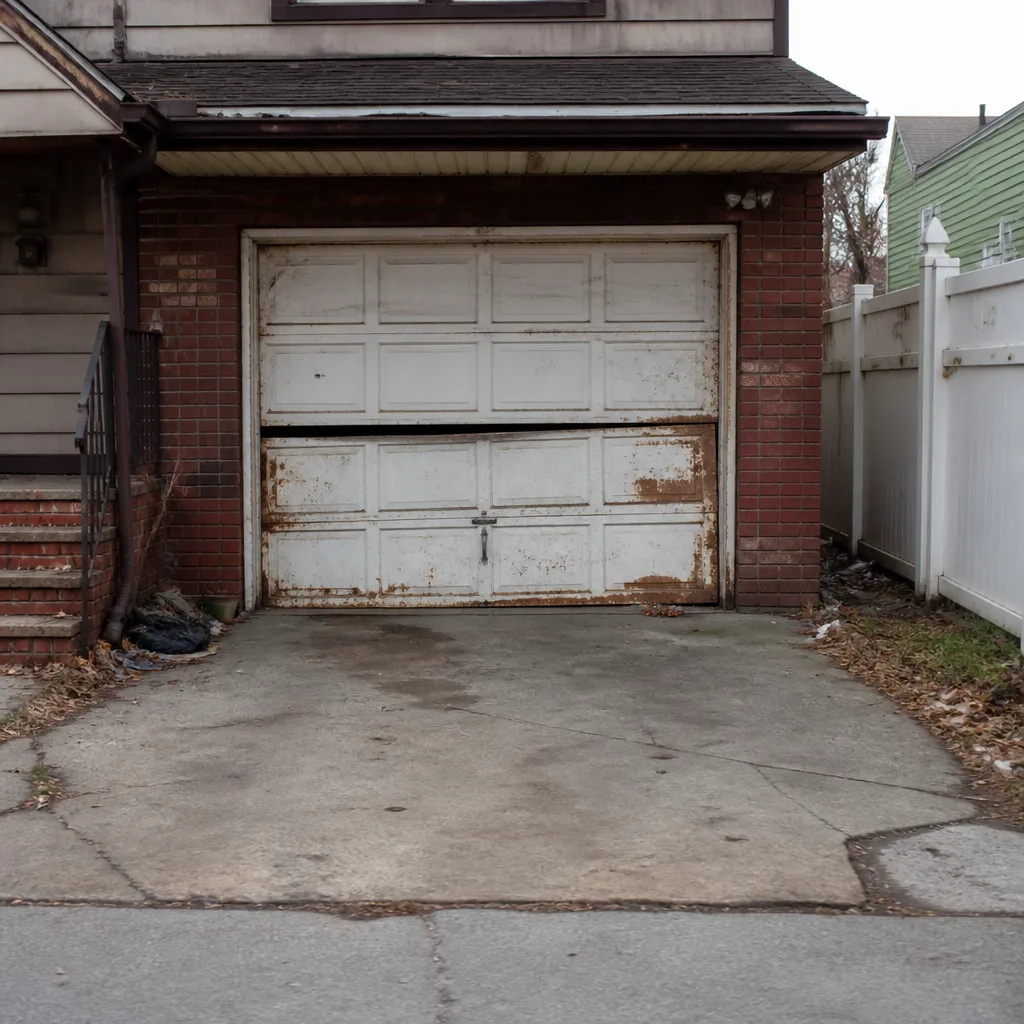 Before
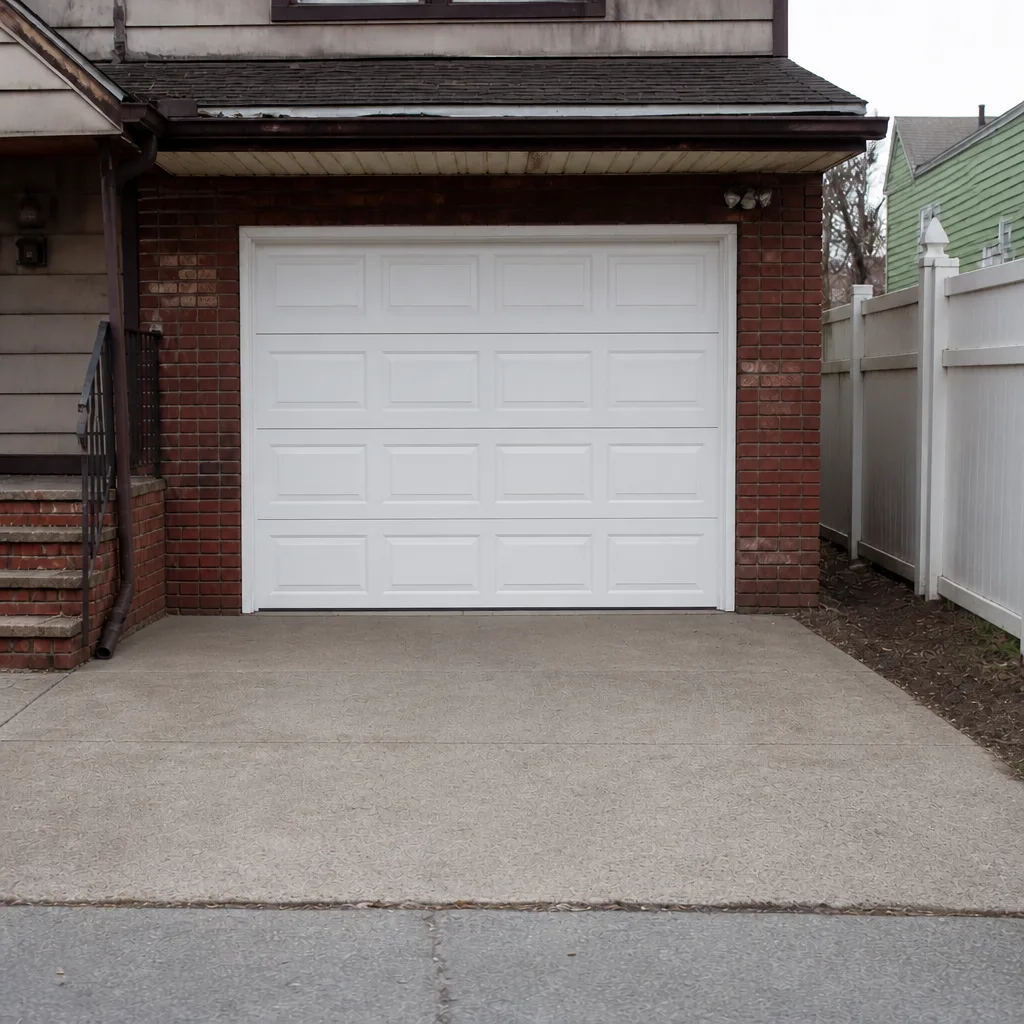 After
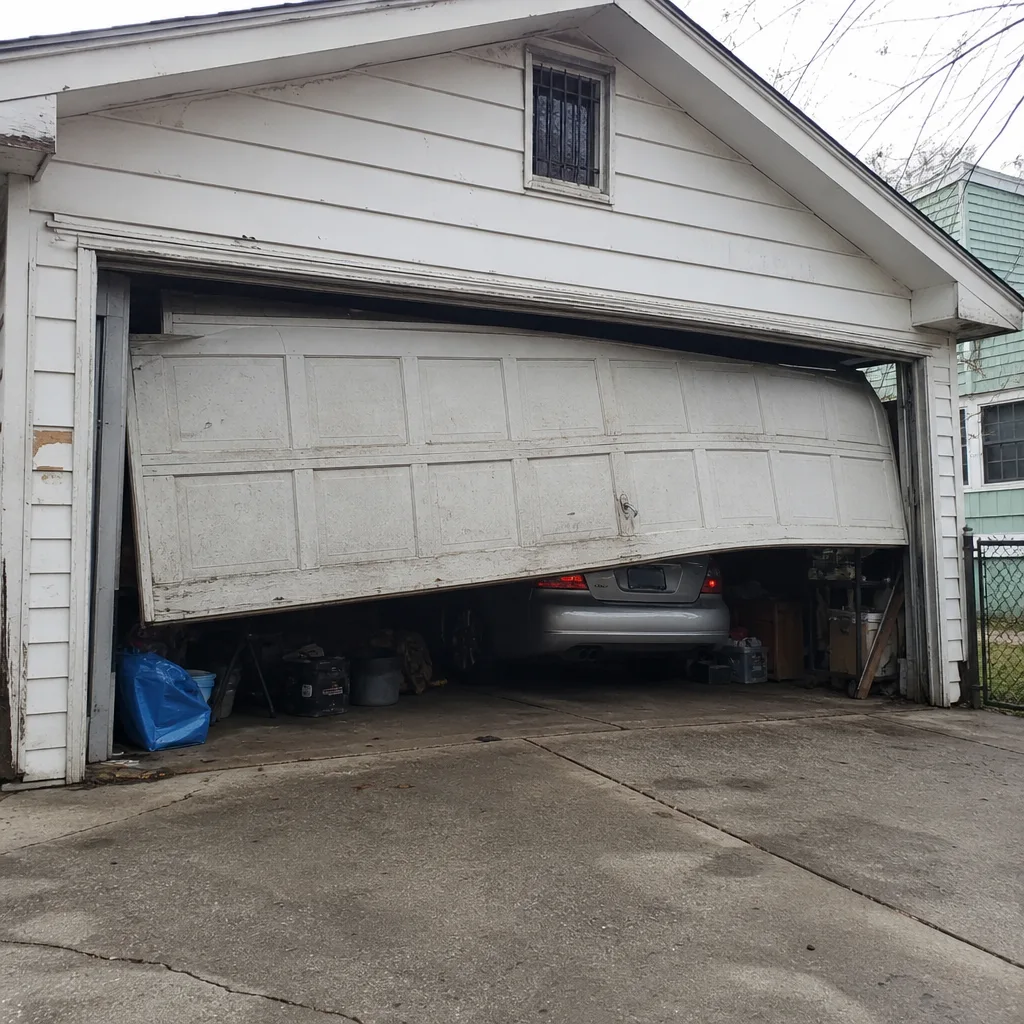 Before
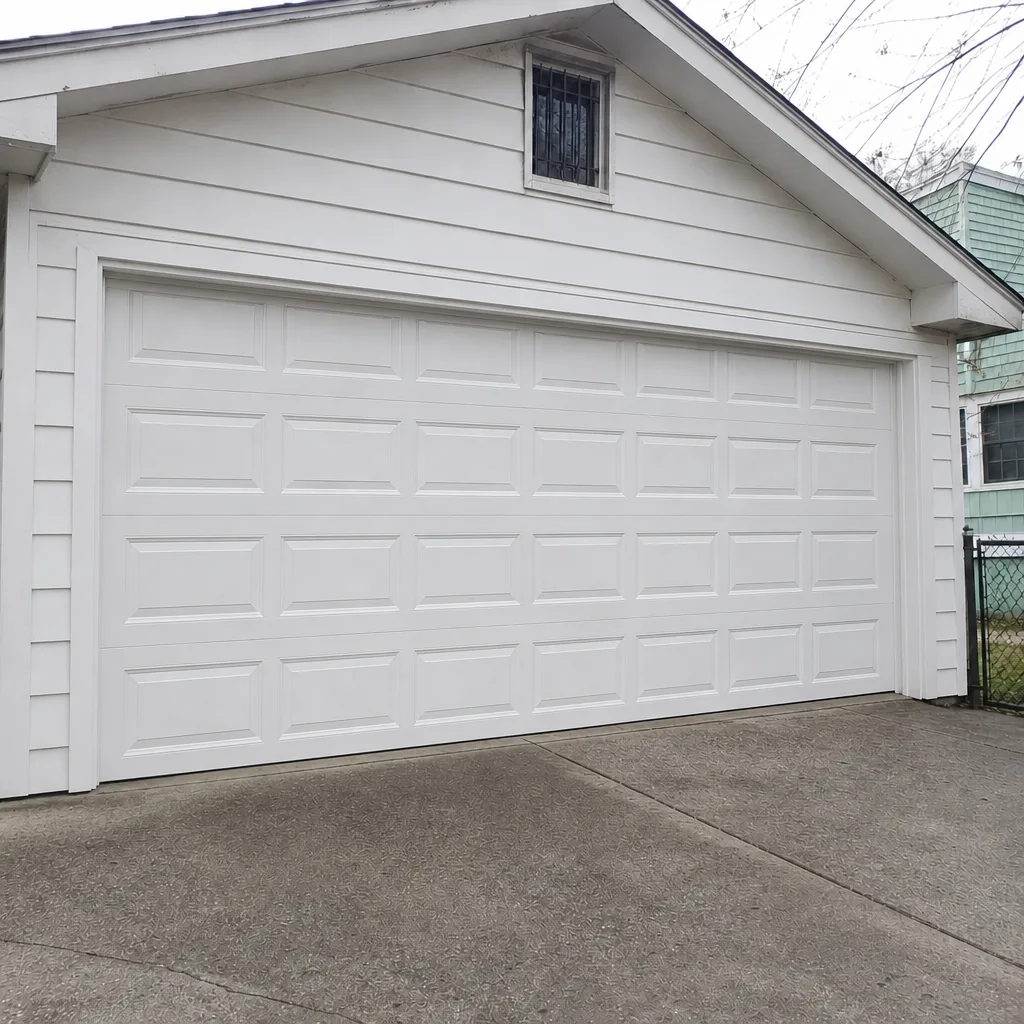 After
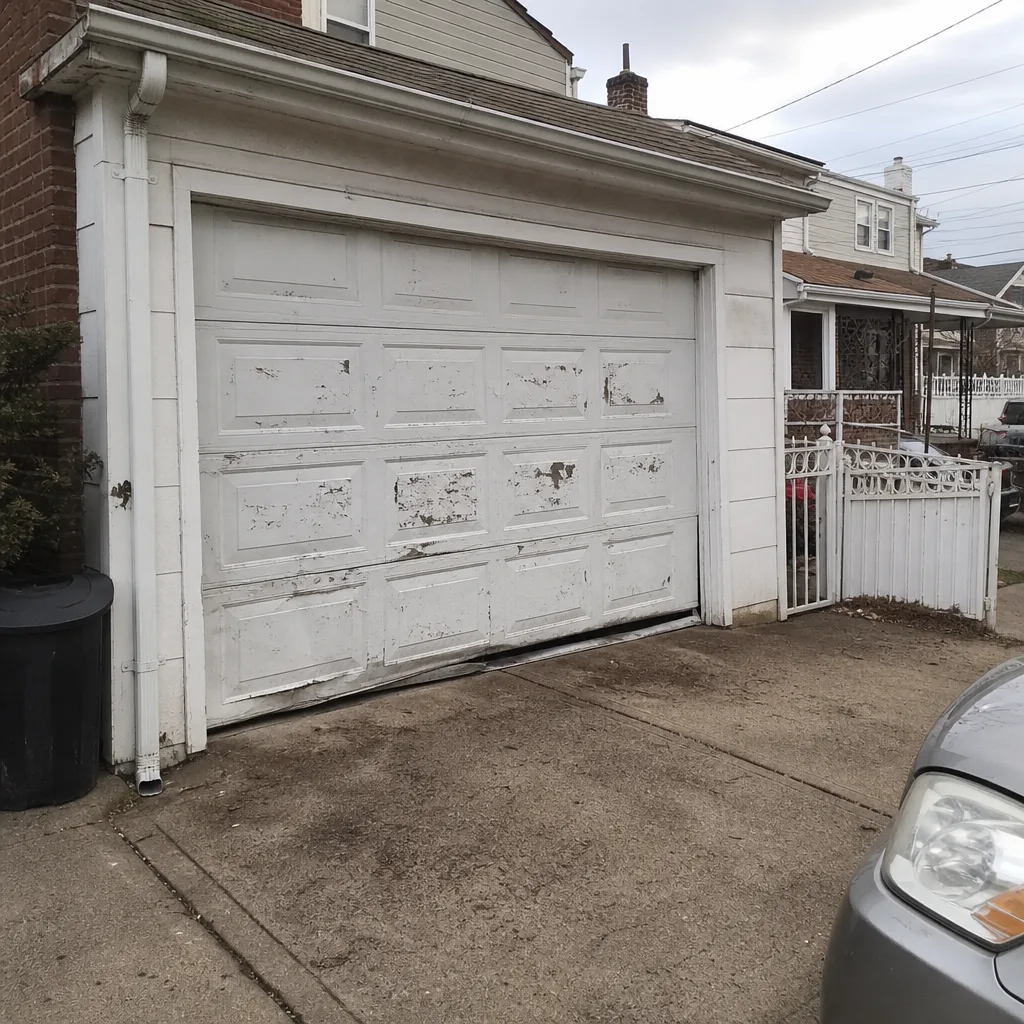 Before
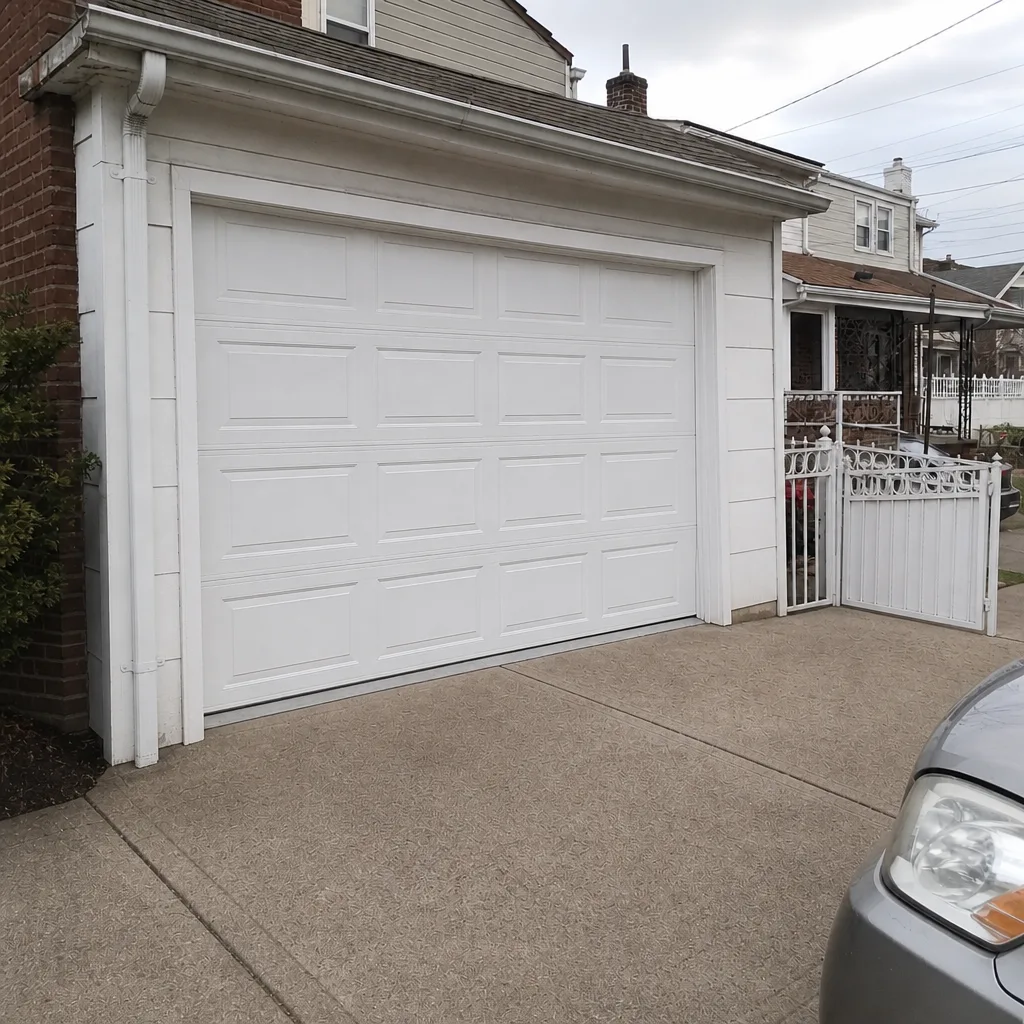 After
Common Mistakes to Avoid
- Buying parts before confirming the door’s spring type. Torsion and extension springs look nothing alike, but many homeowners buy based on price alone and then discover the part doesn’t match. Confirm the type and weight of the door before any purchase.
- Winding a spring without the right bars. Improvised tools fail. The two steel winding bars aren’t replaceable with a screwdriver or an adjustable wrench, and attempting to substitute turns a manageable task into an uncontrolled release of stored energy.
- Ignoring the balance test. After any repair or panel change, the door should stay at the halfway point when you let go. If it drops, the springs are out of adjustment and the opener is taking the load. In East New York’s freeze-thaw climate, a door that binds in January may pass the same test in April, so re-check after the first cold snap.
- Skipping the sensor check after a repair. When the door won’t close after work, the sensors are the first suspect – not the opener. Cleaning the lenses and clearing the path solves most instances before a service call.
- Assuming the door in the video matches yours. Older East New York garages often have non-standard widths and heavier hardware. Measure and confirm before you follow a step-by-step guide.
- Chasing an opener problem that’s actually a door problem. A binding door overloads the opener, and replacing the opener won’t fix the underlying cause. If the door is heavy or lopsided, the opener isn’t the fault – the balance is.
- Not keeping the receipt or written estimate for the work. A written estimate sets the price before work starts, and knowing that in advance is what protects you from surprises once a technician is on site.
When to Call a Professional
Call a professional any time the work involves springs, cables, bottom brackets, or the door’s balance – the risk of serious injury is high enough that the cost savings don’t hold up, no matter how capable you are. Call when the door has dropped, won’t stay closed, or slams down at the end of the cycle. Call when a panel is damaged and the door is heavier or lighter than before. Call when the opener is clicking, humming, or reversing without warning, and call when the garage is trapping your car or leaving the house unsecured – those are the situations where waiting for a weekend project is the wrong move. For opener work on LiftMaster, Chamberlain, Genie or Craftsman units, a technician who diagnoses the system rather than the symptom will save you a callback.
Garage Door Repair East New York offers free estimates in East New York – call (877) 492-2281. We answer 24/7. Fast dispatch from 7am to 7pm, Sunday through Friday, closed Saturday. We work on springs, openers, panels and full installs across LiftMaster, Chamberlain, Genie, Clopay, Amarr, Wayne Dalton, Craftsman and Raynor. Our technicians have up to 15 years of experience. The price is quoted and agreed before any work starts.
Frequently Asked Questions
No – torsion and extension springs should always be replaced by a trained technician, even if you’re experienced with home repairs. The spring holds hundreds of pounds of stored tension, and a release during winding can cause serious injury. In East New York’s tight garages, the working clearance makes the task harder than the average tutorial suggests. Call (877) 492-2281 for a free estimate on a spring replacement.
Lubrication, visual inspection, sensor cleaning and alignment, remote and battery work, and weather seal replacement are all safe for homeowners. The rule is simple: if the task doesn’t touch springs, cables, bottom brackets, or the counterbalance system, you can do it. If it does, hand it to a technician. Call (877) 492-2281 if you’re not sure which category a repair falls into.
No – the written estimate is what sets the price, and it’s agreed before any work starts. We inspect the door, give you a written number, and that number is what you pay when the work is done. Estimates are free. Call (877) 492-2281.
In most cases, yes – same-day service is available for garage door repairs and openers. We answer 24/7, and dispatch runs 7am to 7pm, Sunday through Friday. A call outside dispatch hours is booked into the next opening. Call (877) 492-2281 to schedule.
Because the true cost includes tools, retail parts markup, and the callback repair when something is installed incorrectly. A miswound spring or a wrongly set opener force limit can damage the door and cost more to fix than the original repair. Once you add those, the high-risk DIY tasks often cost more than the professional version. Call (877) 492-2281 for a fixed written estimate.
The local professionals we connect you with are licensed and insured as their state requires. Ask for their credentials before work starts – any reputable technician will provide them.
The Bottom Line
The DIY question for a garage door in East New York isn’t a test of your skill – it’s a calculation of risk against reward. Lubrication, sensors, seals, remotes and visual inspections are genuinely yours to do, and doing them regularly is the single best protection for the door. Springs, cables, brackets and balance are the tasks where the stored energy is high enough that the savings never justify the risk. Partial DIY is where the real value lives: do the prep, do the research, do the maintenance, and let a technician handle the core repair. That’s the split that keeps the door working and the savings intact.
When your door needs the professional side of that split – springs, an opener that’s quit, panels that are past their life, or a full install – call (877) 492-2281 for a free estimate from Garage Door Repair East New York. We answer 24/7. Fast dispatch from 7am to 7pm, Sunday through Friday.
Written by the team at Garage Door Repair East New York.