
Last updated November 21, 2026
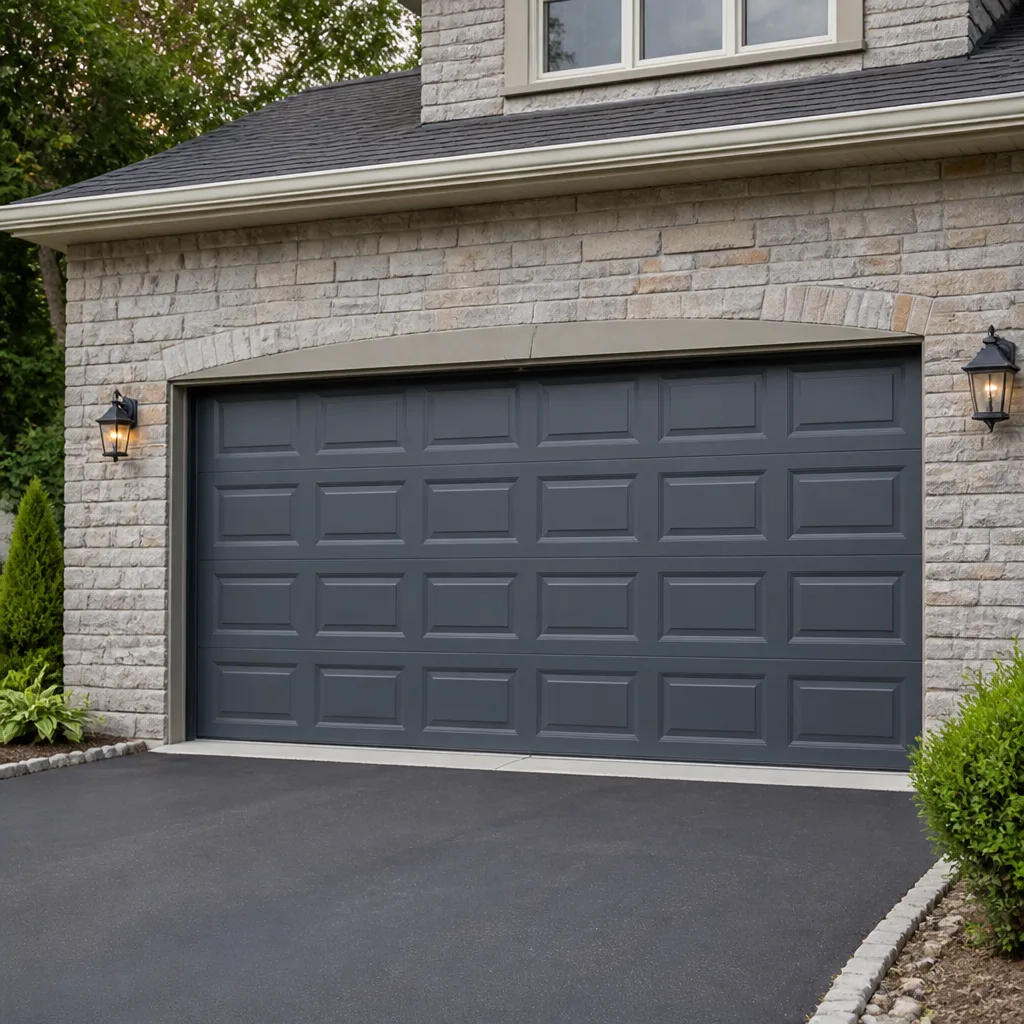 Raised-panel steel
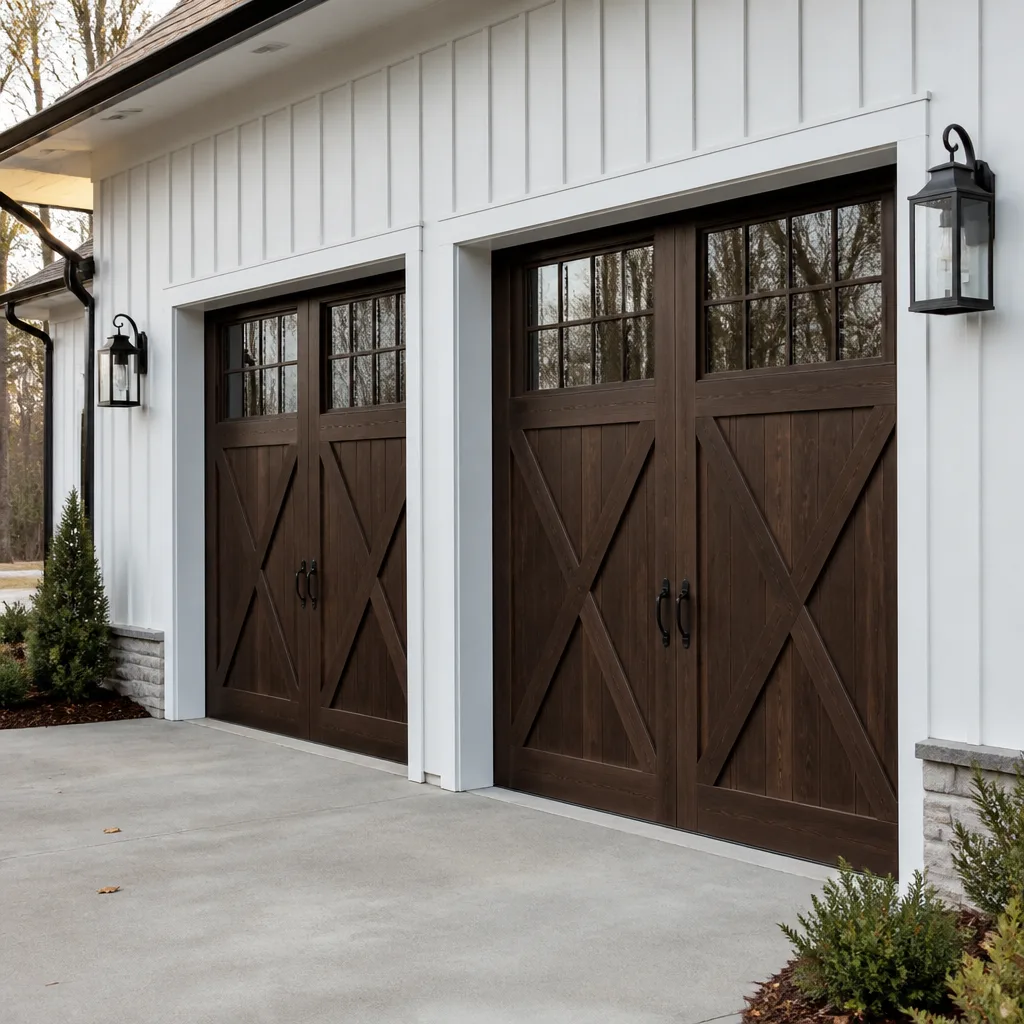 Carriage house
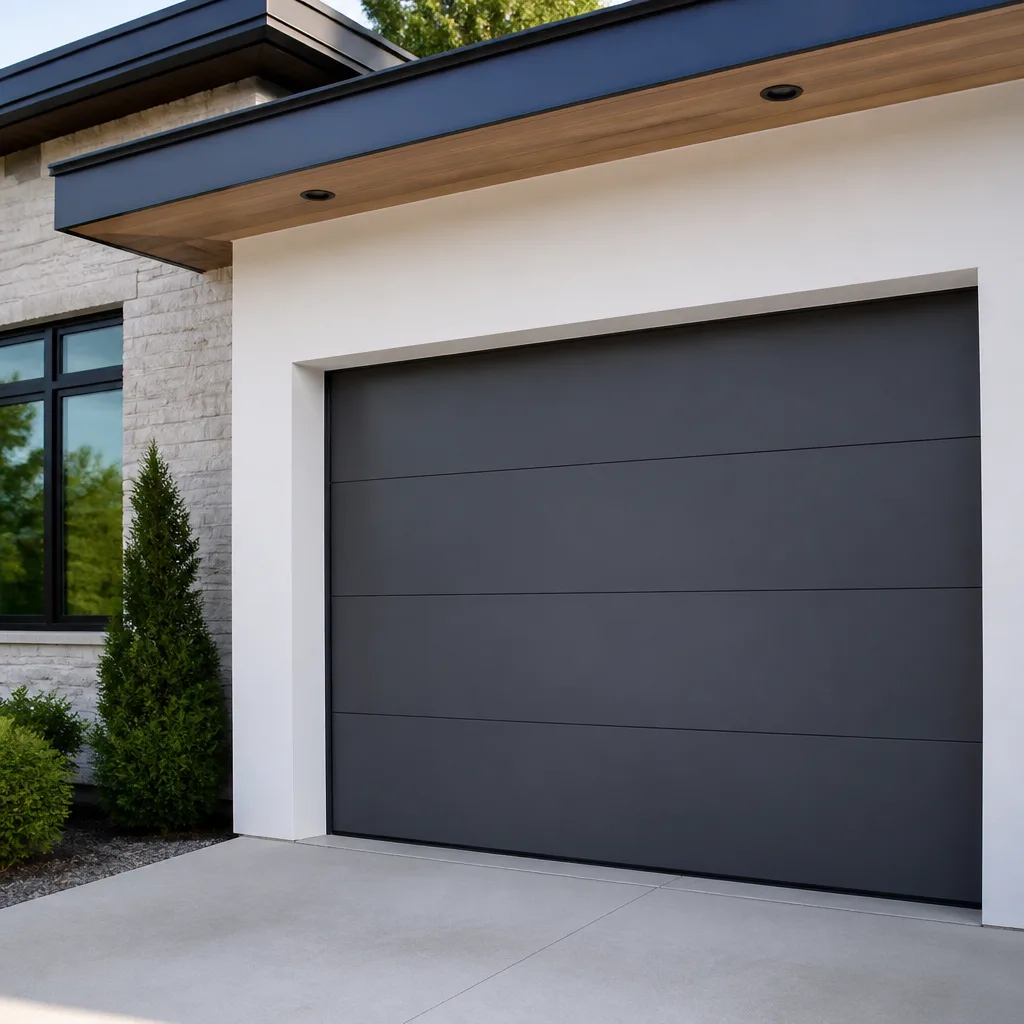 Modern flush
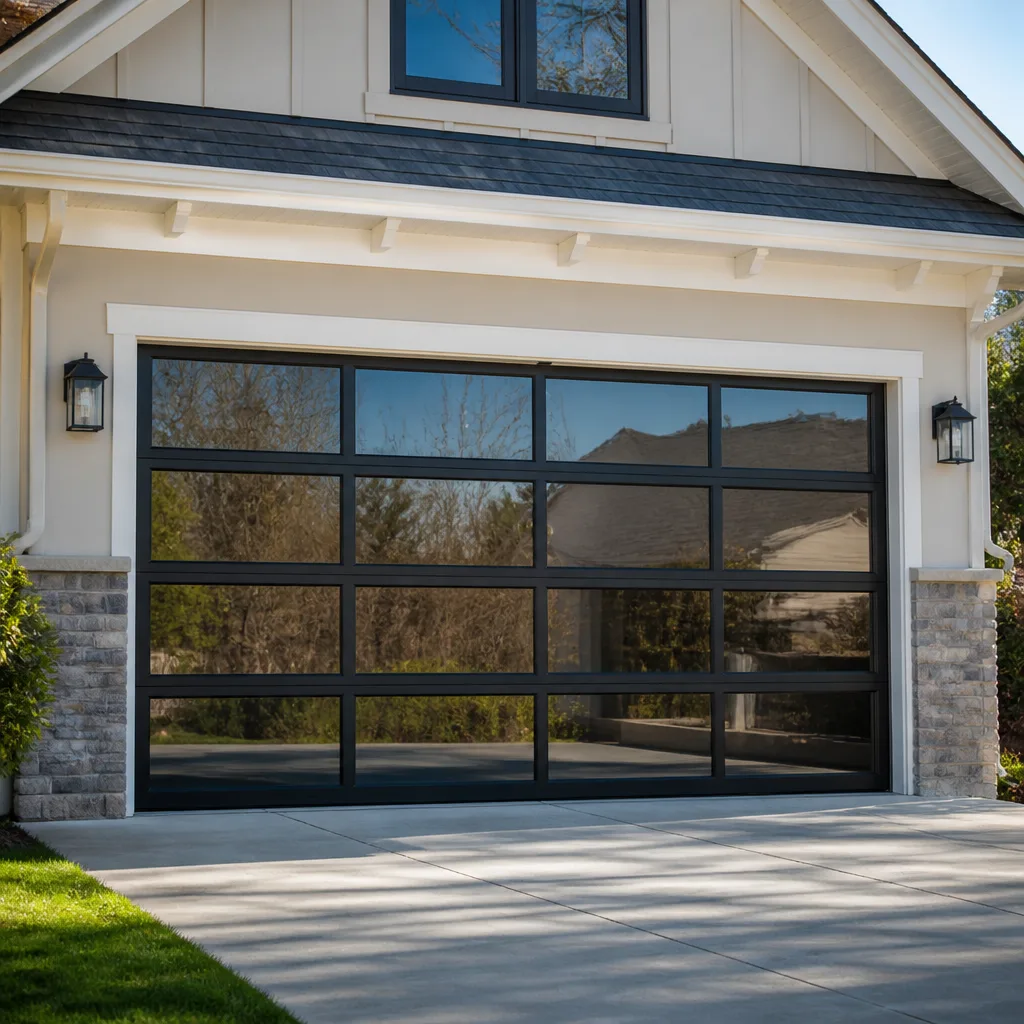 Full-view glass
 LiftMaster openers
 Chamberlain openers
Full 25-point door and opener safety check with every visit - springs, cables, rollers, tracks, and your LiftMaster or Chamberlain opener included
You get a price before we start. It does not change when the pro arrives.
Get your free estimateGarage Door Warning Signs: An East New York Homeowner’s Reference Guide
A grinding noise isn’t the same problem as a scraping noise. A door that’s slow on cold mornings isn’t the same problem as a door that’s slow every morning. But most homeowners call both “the door is acting weird” and hope for the best. That gap between what a door is telling you and what you can describe to a technician is where small repairs turn into big ones. This reference guide indexes the sounds, movements and visual signs we run into across East New York, explains what each one means mechanically, and shows you how to sort a symptom you can watch for a week from one that means stop using the door today.
Quick Answer
Most garage door failures announce themselves before they happen. Grinding points to worn rollers or a dry torsion bar, scraping points to a bent track or a panel out of alignment, and a door that reverses or stops halfway usually means a sensor or travel-limit problem rather than a spring. Treat any door that won’t stay closed, hangs crooked, or makes a loud bang as unusable until a technician looks at it, and treat slow, squeaky or uneven movement as a scheduling item rather than an emergency.
Styles & brands we work with
- Raised-panel steel
- Carriage house
- Modern flush
- Full-view glass
- LiftMaster openers
- Chamberlain openers
Table of Contents
- How to Read Your Garage Door’s Symptoms
- What Each Sound Means: A Symptom Index
- Which Warnings Mean Stop Using the Door Today
- Warning Signs Specific to Older East New York Garages
- How to Describe the Problem Before We Arrive
- Security Warning Signs That Go Beyond Mechanics
- Opener Warning Signs by Brand
- A One-Week Monitoring Checklist
How to Read Your Garage Door’s Symptoms
Your garage door is a balanced system, and balance is the part homeowners rarely think about. A torsion spring or a pair of extension springs carries most of the door’s weight. The opener only has to move that weight, not lift it. When the balance drifts, everything downstream starts complaining: the opener strains, the rollers flatten, the tracks flex, and the door starts moving in ways it didn’t before.
That’s why we ask about timing first. Is the noise new, or has it been building for months? Did it start after a cold snap? Did the door get slower gradually or stop suddenly? Each answer narrows the mechanical cause before anyone touches the door.
We sort symptoms into three buckets:
- Cosmetic and slow-moving. Squeaks, a slightly noisy roller, a faint rattle. These can usually wait for a scheduled visit, though they don’t fix themselves.
- Mechanical wear. Straining opener, uneven travel, a door that reverses before it should. These deserve a call within days, before the wear damages something more expensive.
- Stop-now conditions. A snapped spring, a door hanging crooked, a cable hanging loose, a loud bang from above. Stop operating the door and call.
In East New York, the housing stock makes this reading exercise more important than it is in newer suburbs. A lot of the detached and semi-detached homes here have garages that were built decades ago and retrofitted since, so a single door setup often mixes an older wood frame, a torsion bar that’s been there a long time, and an opener that went in later. Symptoms that would point one direction on a new door can point somewhere else on a garage that’s had that much history. Knowing which era each component came from saves a wasted visit, and it’s why we ask questions about the garage itself, not just the door.
What Each Sound Means: A Symptom Index
Sound is the most reliable early warning you have. Use this index to match what you’re hearing to the part that’s usually responsible, then decide how fast to act.
Grinding
A steady grind while the door moves usually means worn steel rollers or a torsion bar that’s lost lubrication. If the grind is sharp and rhythmic, suspect a roller bearing that’s seized and is now dragging instead of rolling. This one can wait a few days, but the drag puts extra load on the opener motor every cycle.
Scraping
A scrape that sounds like metal on metal is different from a grind. It usually points to a panel out of alignment or a bent track section the roller is riding against. A scraping door is adding wear to the track and the panel edges every time it moves. Get it looked at within the week.
A Loud Bang From Above the Door
That’s a torsion spring breaking, and it’s the one sound that means stop. The door may look fine and the opener may still hum, but the spring was carrying the weight. Do not run the opener to test it. More on this in the next section.
Rattling
Loose hinge bolts, a bracket that’s worked free, or a panel fastener backing out. Usually minor, but worth tightening before the rattle turns into a bracket failure.
Squealing
Dry rollers, dry hinges, or a dry torsion bar. A lubrication issue in most cases, and the cheapest symptom on this list to resolve if you catch it early.
Which Warnings Mean Stop Using the Door Today
This is the section to read twice. Some symptoms are scheduling items, and some are stop-now conditions where running the door risks injury or serious damage. Here’s how we draw the line.
Stop using the door and call if you notice:
- A loud bang from the torsion bar area, followed by a door that feels unusually heavy or won’t lift.
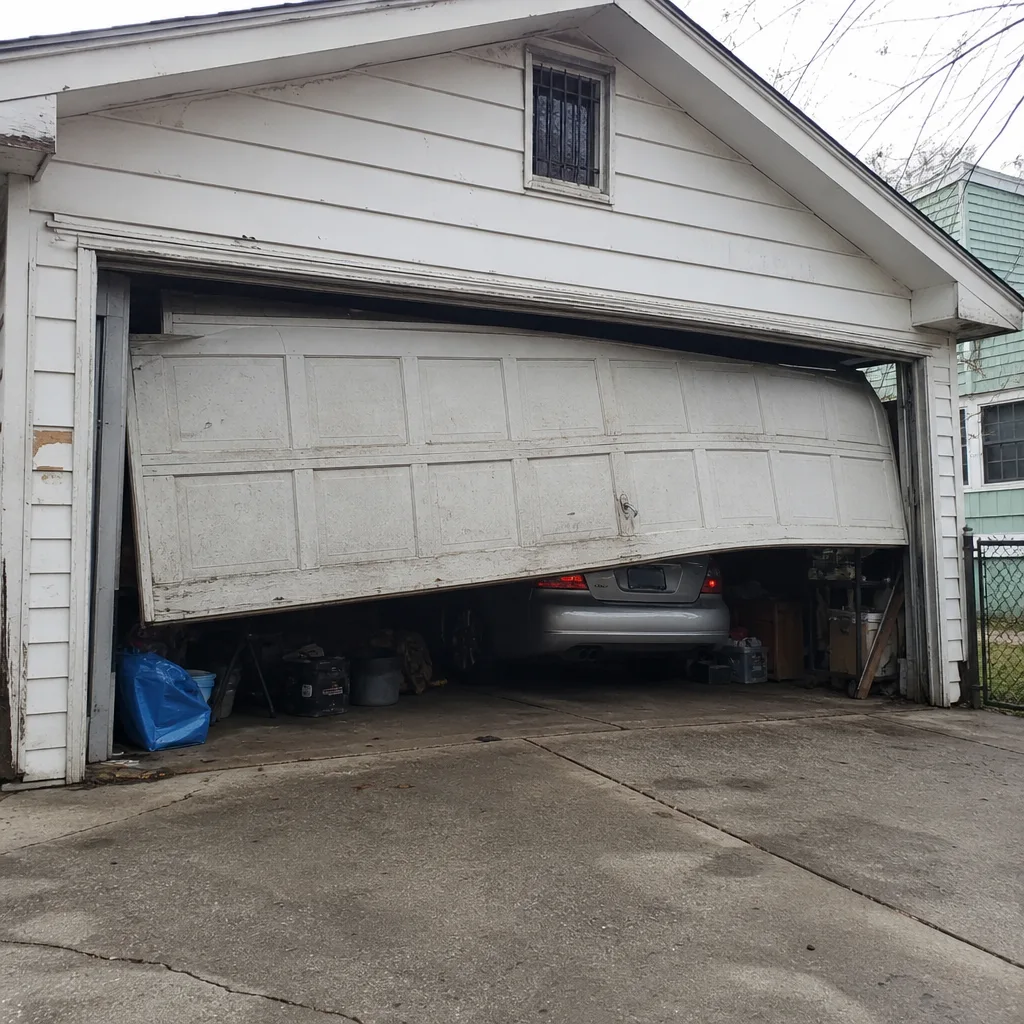
- A door hanging crooked, with one side higher than the other.
- A cable that’s hanging slack, frayed, or off its drum.
- A door that free-falls or slams down instead of lowering under control.
- A bent or separated track with a roller out of the channel.
- Visible separation at a hinge or a panel that’s pulling away from the frame.
Springs, cables and torsion bars are under heavy tension, and they’re the reason this trade has real injury risk. We don’t walk homeowners through adjusting or releasing any of that hardware, and we’d ask you not to attempt it. The tools and the training exist for a reason. A trained technician releases tension in a controlled sequence with the right winding bars; a homeowner with a pair of pliers is one slip from a serious hand or face injury. That’s not a sales line, it’s the reason spring work is one of the jobs we handle directly rather than sending out. If your door shows any of the signs above, leave it closed if you can and call for garage door repair.
Safe to monitor for up to a week:
- Gradual squeaking or squealing.
- A door that’s a little noisier than it used to be but still moves evenly.
- A remote that occasionally doesn’t respond on the first press.
- A minor rattle at a hinge.
Monitoring doesn’t mean ignoring. Note when the symptom started and whether it’s getting worse, and put a call on your list before the week is out.
Warning Signs Specific to Older East New York Garages
Homes across East New York, from the blocks near Pennsylvania Avenue to the streets off Pitkin, include a lot of garages built long before today’s openers existed. That history shows up in specific, predictable ways. We look for these on every older garage we work on.
Wood Frame Rot
Look at the bottom corners of the door frame and the jamb where it meets the ground. Soft wood, flaking paint, or a frame that crumbles when you press a screwdriver into it means the frame can no longer hold the track brackets securely. A track that’s anchored to soft wood will drift out of alignment no matter how often it’s adjusted. If you can push a key into the wood at the base of the frame, mention it when you call.
Corroded Torsion Bar Mounts
The center bearing plate and the end plates that hold the torsion bar need to be solid. Rust streaks running down from a mount, or a mount that’s visibly pulled away from the header, is a structural warning. The bar is under tension and its anchors are not something to leave loose.
Worn 1990s-Era Opener Chains
Plenty of East New York garages still run a chain-drive opener from the 1990s, and those chains stretch with age. A chain that sags visibly below the rail, slaps against the housing, or needs constant readjustment is telling you it’s near the end of its service life. Many of these units are Genie or Craftsman models whose parts are increasingly hard to source, so an honest conversation about repair versus replacement is worth having before you’re forced into it.
Single-Panel and Sectional Doors That Have Been Repainted
Repeated repainting can add weight and hide stress cracks at the panel edges. Run a hand along the bottom section and look for hairline cracks radiating from the hinge points. A cracked panel is a replacement question, not a repair question.
How to Describe the Problem Before We Arrive
The single biggest reason a repair takes two visits instead of one is a description that sends us to the wrong part of the system. You don’t need to diagnose anything, and you don’t need the right vocabulary. You need to answer five questions accurately.
- When does it happen? On opening, on closing, at a specific point in the travel, or right at the start. “It stops about a foot off the floor” is far more useful than “it doesn’t work.”
- What does it sound like? Grinding, scraping, banging, squealing, or nothing at all. If the opener hums but the door doesn’t move, say exactly that.
- Is the door balanced? Pull the release handle with the door closed, then lift it by hand about halfway. A balanced door stays put. One that feels very heavy or drops on its own tells us the spring is the issue.
- What brand and roughly what age is the opener? The label on the motor housing gives the brand and model. LiftMaster, Chamberlain, Genie and Craftsman all behave differently, and knowing the model lets us bring the right parts.
- What’s the door made of, and how old is the garage? A steel Clopay sectional on a newer frame is a different call than a wood door on a garage from the 1950s. Frame condition often determines how we approach the track and springs.
One safety note on step three: if you hear a bang from the spring area at any point, skip the balance test entirely and call. Don’t lift a door whose spring has failed.
Security Warning Signs That Go Beyond Mechanics
A garage door that’s slowly failing mechanically is also failing as a barrier. East New York homeowners should pay attention to these signs, because they matter for the safety of the home, not just the convenience of the door.
- A gap at the bottom seal. A worn bottom seal lets daylight and weather in, and it tells anyone looking that the door isn’t sitting flush. A door that doesn’t close fully is easier to defeat.
- A door that reverses before it meets the floor. This is usually a photo-eye sensor or travel-limit issue. It leaves the door open a crack, which defeats the point of closing it.
- Slow closing or a door that hesitates. Hesitation often points to a weakening spring or a straining opener. It also means the door may not fully lower if something obstructs it.
- Failed lock engagement on a manual door. If the slide bolt or lock bar doesn’t seat cleanly, the door is only held by gravity.
- A remote that works from far away. Most modern openers have rolling-code security built in, but older units don’t. If your opener is a 1990s model, that’s worth discussing when we’re out.
None of these are reasons to panic. They’re the kind of signs that are easy to put off and worth a look. A security gap is a repair, not a replacement, in most cases, and often a simple one.
Opener Warning Signs by Brand
We work on your brand, and we see brand-specific patterns worth knowing. These are the failures we encounter most across the openers installed in East New York homes.
LiftMaster and Chamberlain
These two share a lot of internal design. Common signs include a remote that works only up close (usually a logic board or antenna issue), a door that reverses immediately after closing (often a sensor alignment problem), and a motor that hums without moving the door (usually a gear or capacitor issue). Diagnostic steps are similar across both, which helps when you describe the symptom over the phone.
Genie
Older Genie chain drives develop a distinctive slap as the chain wears. Newer models sometimes show a travel-limit problem where the door stops short on closing. If your Genie makes it halfway and reverses, that’s usually a limit switch adjustment, not a motor failure. Worth calling, but not urgent.
Craftsman
Craftsman openers from the 1990s are still common in East New York garages, and the most frequent early warning is a remote that needs repeated presses or works only from certain angles. That’s often the receiver, not the remote. A worn drive gear is the other common failure, and it usually announces itself with a grinding sound from the motor housing.
If your opener is failing and you’re weighing repair against replacement, our garage door opener repair team can tell you honestly which side of that line your unit falls on. We don’t replace an opener that has years of service left in it.
A One-Week Monitoring Checklist
If your symptoms fall in the “monitor” category, here’s how to watch them properly. Use this as a daily log for a week before you book a visit.
- Day 1: Record the baseline. Write down exactly what you hear, when it happens, and how long the door takes to open and close. Count the seconds if you can.
- Day 2: Test with the door unloaded. With the door closed and nothing underneath, press the opener. Note whether the door starts smoothly or hesitates.
- Day 3: Check the safety reverse. Place a block of wood flat under the door and close it. The door should reverse on contact. If it doesn’t, that’s a sensor or limit issue worth calling about.
- Day 4: Walk the tracks. With the door closed, look along both vertical tracks for dents, rust, or bolts that have worked loose.
- Day 5: Inspect the springs and cables visually. Look only. Don’t touch. Note anything that looks stretched, frayed, or visibly different from the other side.
- Day 6: Check the bottom seal and frame. Look for gaps, soft wood, or a seal that’s pulling away.
- Day 7: Compare your notes. If any symptom has gotten worse over the week, call. If it’s stable, schedule a visit at your convenience rather than waiting for it to fail.
If the door starts showing a stop-now sign at any point during that week, stop the checklist and call. The log doesn’t matter at that point; the door does.
Common Mistakes to Avoid
- Lubricating the tracks. Track lubrication attracts grit and makes rollers slide instead of roll. Lubricate the springs, hinges and roller bearings; keep the tracks clean and dry. This is the mistake we correct most often on East New York doors.
- Trying to adjust or release the torsion springs yourself. This is genuinely dangerous hardware. The tools exist because the tension is too high to manage without them. Call a technician.
- Calling a snapped spring a “door problem” and running the opener to check. Running an opener against a broken spring strains the motor and can damage the door. Stop using it.
- Replacing the opener when the door is the problem. A door that’s off balance will wear out a brand-new opener just as fast as the old one wore out. Diagnose the whole system.
- Ignoring a gap at the bottom seal through a full winter. A worn seal lets cold air and moisture in, and moisture at the bottom of a wood frame is how rot starts. In an older East New York garage, that’s a small repair that becomes a frame repair.
- Waiting for a slow door to stop completely. A door that’s getting slower is telling you the balance is drifting. Catch it early and it’s often a spring adjustment; catch it late and it’s a spring replacement plus a strain-damaged opener.
- Describing the problem in only one word. “Broken” could mean a snapped spring, a dead remote, a bent track, or a sensor. The five questions above are worth the two minutes it takes to answer them.
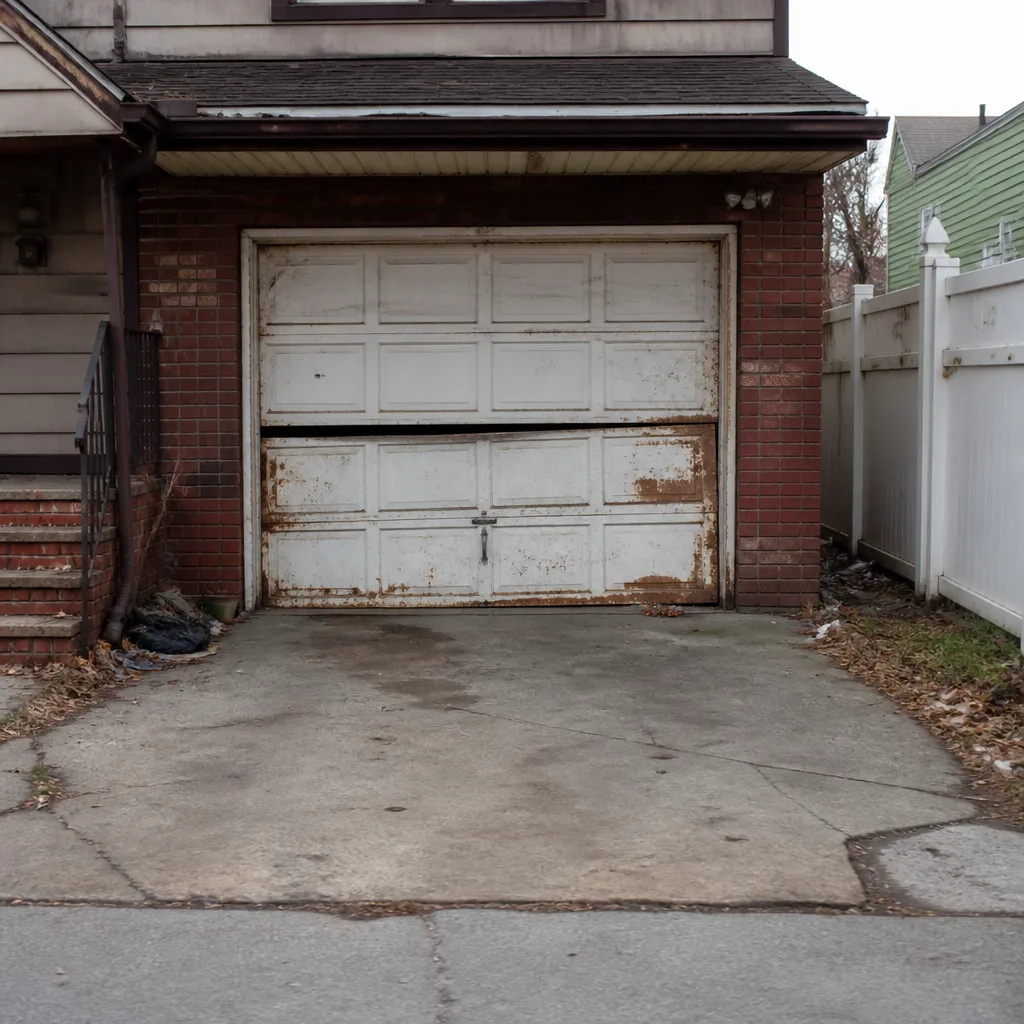
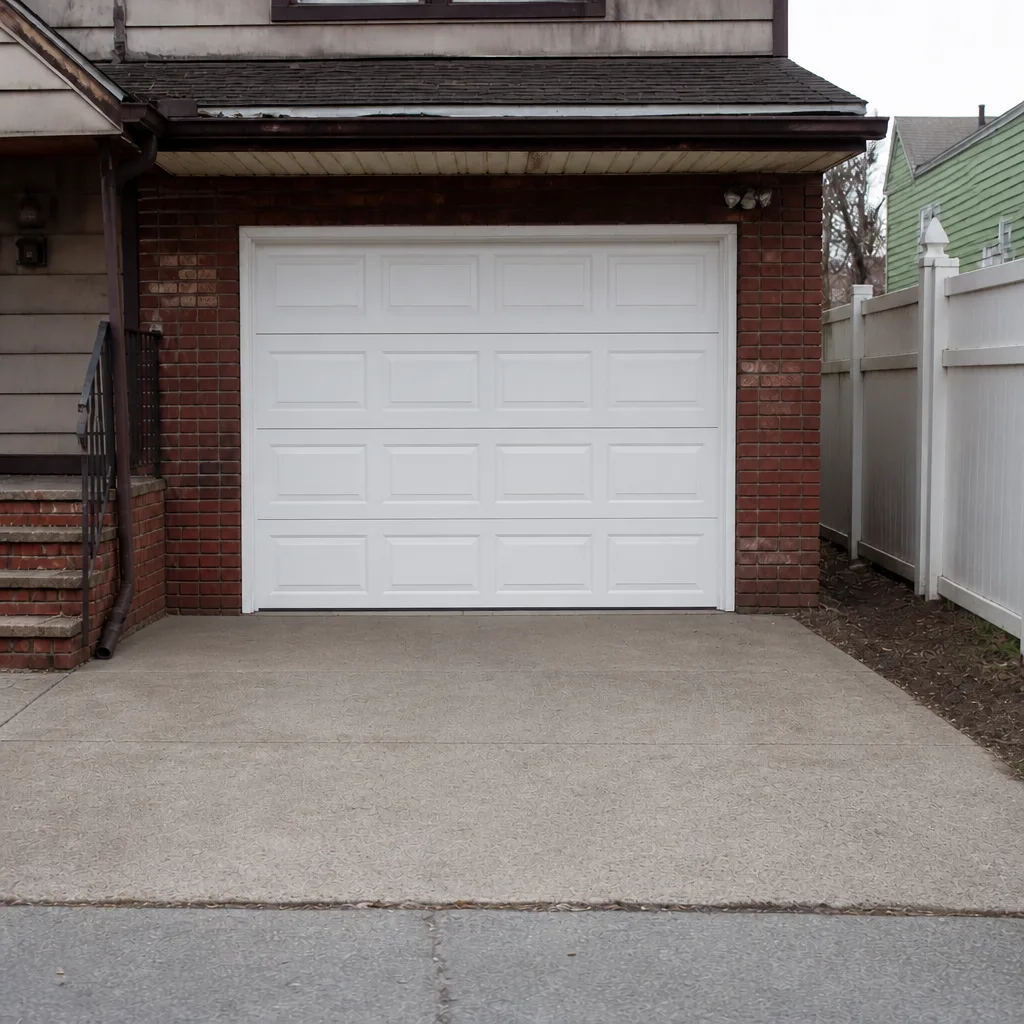
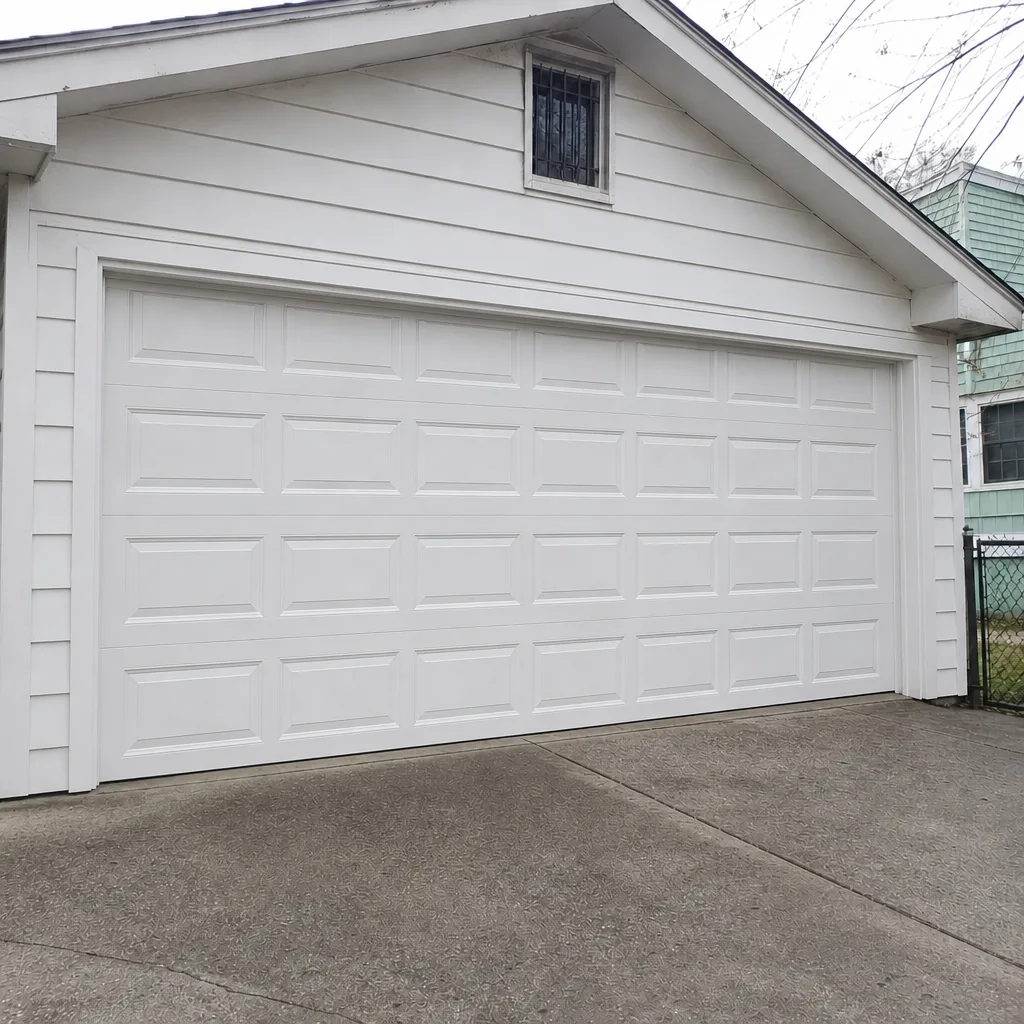
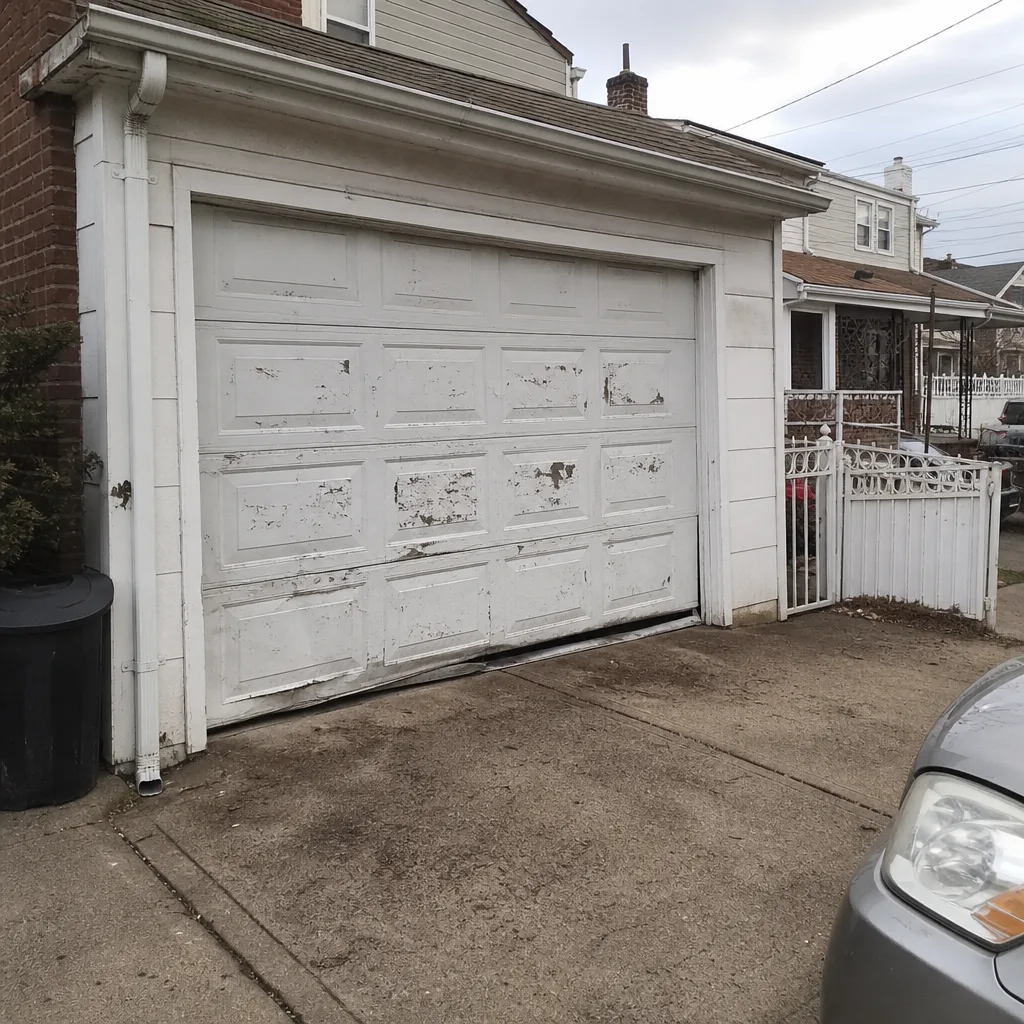
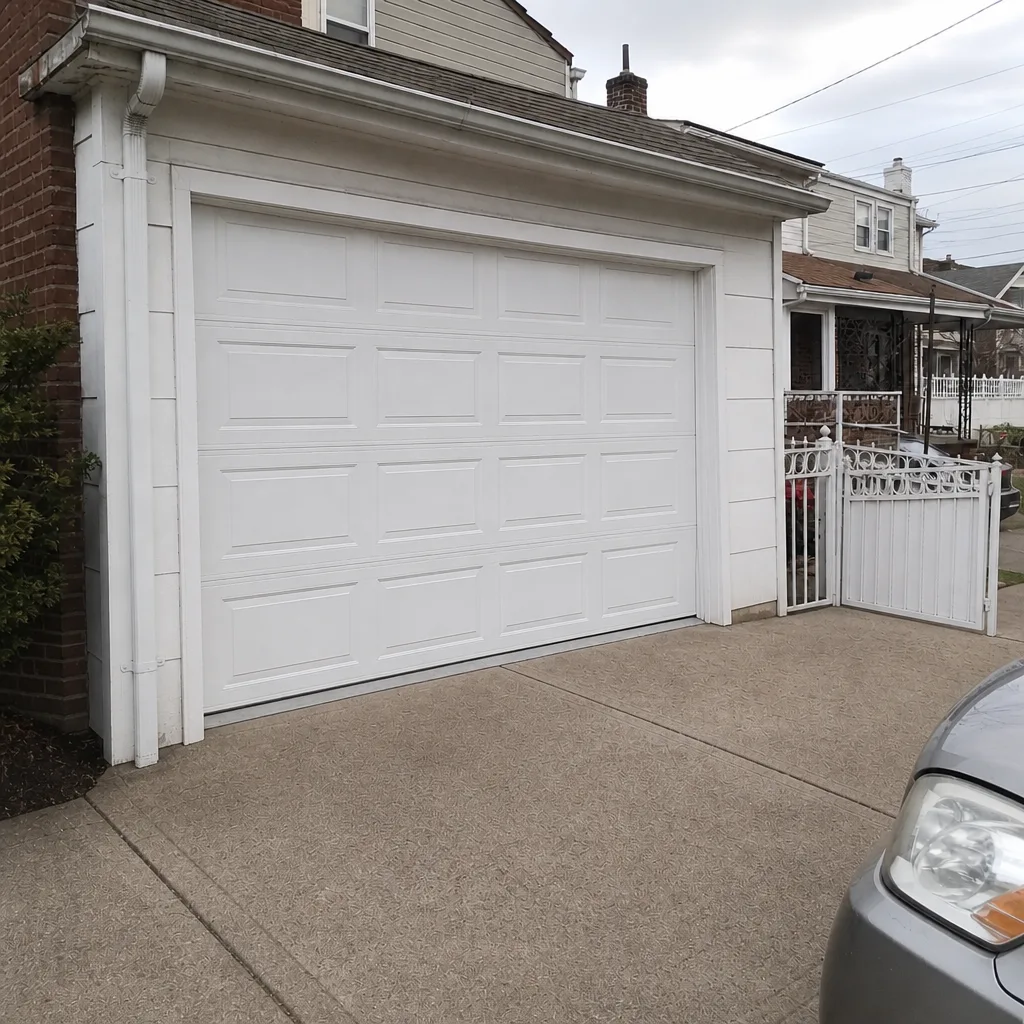
See the difference
 Before
 After
 Before
 After
 Before
 After
When to Call a Professional
Call us when the symptom points at a spring, a cable, a torsion bar, or a track that’s visibly out of line. Call when the door hangs crooked, free-falls, or makes a loud bang. Call when the security gaps matter more than the convenience, or when an older opener is straining and you’re unsure whether it’s worth repairing. And call when you’ve watched a symptom for a week and it’s getting worse instead of holding steady.
Garage Door Repair East New York offers free estimates in East New York, and our technicians have up to 15 years of experience across LiftMaster, Chamberlain, Genie and the door brands that show up in this neighborhood. We’ll tell you whether it’s a repair or a replacement, and we’ll give you the written price before any work starts. Call (877) 492-2281. We answer 24/7. Fast dispatch from 7am to 7pm, Sunday through Friday.
Frequently Asked Questions
A gradually slowing door that’s getting louder is the most common early warning we see. It usually points to spring wear or a straining opener, and it’s the sign homeowners most often ignore until the door stops entirely. Call (877) 492-2281 for a free estimate.
No. A door with a broken spring should stay closed and unused until a technician looks at it. The remaining spring is now carrying the full load, and running the opener can damage it further or drop the door unexpectedly. Call us for a same-day assessment.
If the grinding comes from the motor housing at the top of the door, it’s usually the opener, often a worn drive gear. If it comes from the rollers or the torsion bar, it’s the door hardware. Pull the release handle and move the door by hand, carefully: if the grinding follows the door’s movement, it’s the door. If it stays with the motor, it’s the opener. Call (877) 492-2281 and we’ll narrow it further.
It can be. A door that hesitates before it fully closes may be fighting spring wear or a sensor problem, and it can leave a gap at the bottom. That’s a mechanical issue and a security issue at once. If your door hesitates, book a visit before it fails completely.
Often it can be adjusted, but a chain that sags repeatedly after adjustment is telling you it’s stretched beyond its service life. Genie and Craftsman units from that era are common in East New York, and we can tell you on-site whether adjustment or replacement is the right call.
We answer 24/7, and we offer same-day service for urgent problems. Fast dispatch runs from 7am to 7pm, Sunday through Friday. A call outside dispatch hours is booked into the next opening, Sunday through Friday, 7am to 7pm. Call (877) 492-2281 to schedule.
The Bottom Line
Every warning sign your door gives you points to a specific part, and matching the sign to the part is the difference between a small repair and a bigger one. Sort your symptoms into cosmetic, mechanical wear, and stop-now. Never touch the springs or cables yourself. Log the symptom for a week if it’s stable, and call early if it’s getting worse. For older East New York garages, add frame rot, corroded mounts and a stretched 1990s chain to your regular check. If your door is telling you something, or if you’ve outgrown it and want to talk about garage door installation, we’re here. For a broader look at what we handle across the neighborhood, see Garage Door Repair East New York. Call (877) 492-2281 for a free estimate.
Written by the team at Garage Door Repair East New York.